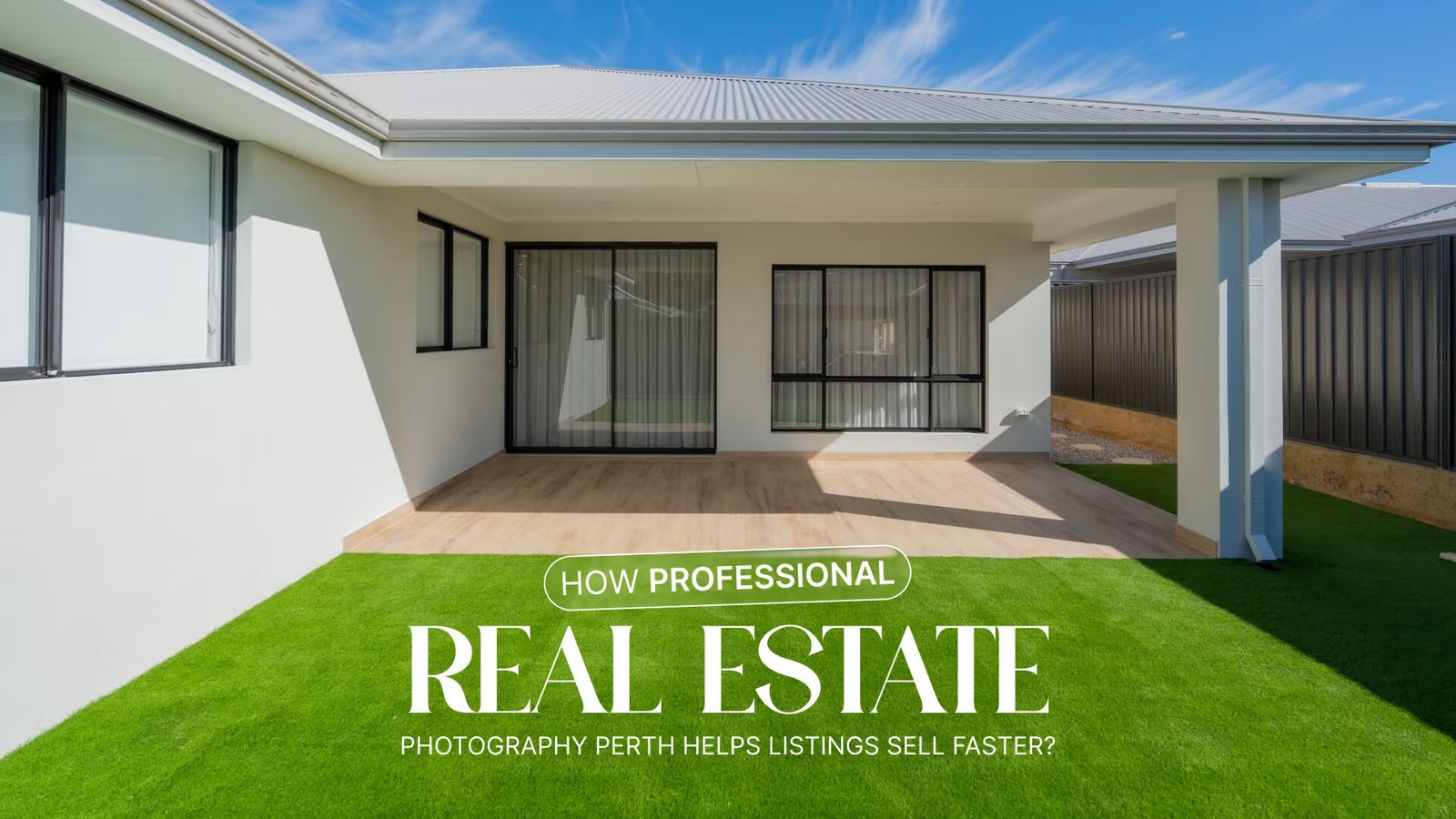
How Professional Real Estate Photography Perth Helps Listings Sell Faster
Most buyers decide whether a property interests them before they ever step through the front door. They scroll through listing photos on their phone, often in under ten seconds, and either keep looking or move on. That single decision point is why real estate photography Perth agents and sellers choose has become such a practical part of selling a home, not just a nice extra.
A listing with flat lighting, crooked angles, or a phone camera photo can undersell a property that is genuinely well presented in person. On the other hand, sharp, well lit images can make an ordinary room look inviting and spacious. The difference often comes down to who is behind the camera.
First Impressions Are Made Online, Not At The Open Home
Property portals like realestate.com.au and Domain are where most buyers begin their search. Before they book an inspection or ask a question, they judge a home almost entirely on its photos. If the images are dull or inconsistent, buyers assume the property itself is average, even if that is not true.
A perth real estate photographer who understands how buyers browse listings will shoot with that behaviour in mind. Wide, well composed shots of living areas, natural light in bedrooms, and clean exterior angles all help a property stand out in a crowded results page. This is not about making a house look like something it is not. It is about showing it clearly, at its best, the way a buyer would experience it if they walked in.
What Makes Real Estate Photography Perth Different
Perth has its own mix of light, architecture, and buyer expectations. Coastal suburbs deal with harsh midday glare, while inner city apartments often rely on artificial lighting and tighter spaces. A photographer working across WA needs to adjust for these conditions on the spot, not apply the same settings to every property.
Local experience also means knowing which angles suit a Perth style home, from wide verandas to open plan kitchens, and understanding what local buyers actually respond to. A photographer who shoots across the state regularly picks up on these patterns much faster than someone shooting real estate occasionally.
Photography And Videography Working Together
Photos alone no longer tell the full story of a property. Real estate photography & videography used together give buyers a much clearer sense of layout, flow, and scale before they arrive in person. A short video walkthrough lets a buyer imagine themselves moving from the entry to the kitchen to the backyard, which static images cannot always convey.
Drone footage adds another layer, particularly for larger blocks, acreage, or homes near the coast. An aerial shot can show proximity to parks, water, or the wider street, giving context that ground level photos miss. For agents marketing premium or unique properties, this kind of footage often becomes the first thing shared on social media and in email campaigns.
Why A Fast Turnaround Matters
Listings move quickly once a property is ready to go to market. Agents usually have a tight window to get photos back, build the listing, and start driving traffic before an open home. A photographer who delivers edited images within a day or two, rather than a week, keeps that momentum going instead of stalling it.
At Snapshot Cinemotions, quick turnaround is treated as part of the service, not an add on. Shoots are scheduled around the agent's timeline, and edited photos and footage are delivered fast enough to go live while buyer interest is still fresh.
What To Look For In A Perth Real Estate Photographer
Not every photographer who offers real estate work has experience with it specifically. A few things separate a genuinely useful service from a generic one.
Understanding of light and timing. Knowing when to shoot a property, whether that is early morning for a north facing home or late afternoon for a twilight shot, changes how a listing feels.
Consistent editing style. Buyers browsing multiple listings notice when photos look inconsistent in colour or exposure. A steady editing approach keeps a portfolio, and an agency's listings, looking professional across the board.
Drone capability where it is useful. Not every property needs an aerial shot, but knowing when one adds value, rather than using it as a default, shows judgment.
Reliable delivery times. A photographer who communicates clearly about when files will be ready makes it easier for agents to plan campaigns around a fixed schedule.
Serving Agents And Homeowners Across WA
Whether it is a family home in the suburbs, an apartment in the city, or a rural property outside the metro area, the same principle applies. Buyers respond to clear, honest, well shot visuals. Snapshot Cinemotions works with agents and private sellers across WA, adjusting each shoot to the property and the market it is going into, rather than applying one fixed approach to every job.
Good real estate photography does not need to exaggerate a property. It simply needs to represent it accurately and clearly enough that the right buyer stops scrolling and books a viewing.
Frequently Asked Questions
How long does a real estate photography shoot usually take?
Most residential shoots take between 45 minutes and two hours, depending on the size of the property and whether video or drone footage is included.
Do I need drone footage for every listing?
Not always. Drone shots work best for larger blocks, coastal properties, or homes where the surrounding street and location add to the appeal. For smaller inner city properties, ground level photography is often enough.
How quickly can I expect the final photos?
Turnaround is usually within one to two business days, which allows agents to get listings live while buyer interest is still building.
Can photography and videography be booked together?
Yes. Many agents book both in a single visit, which reduces disruption for sellers and keeps the visual style consistent across photos and video.
Does Snapshot Cinemotions cover areas outside Perth's CBD?
Yes. Coverage extends across WA, including surrounding suburbs and regional areas, so both metro and outer market listings can be shot with the same level of care.
Ready To Get Your Listing Noticed?
If you have a property going to market soon, get in touch with Snapshot Cinemotions to book a shoot. We will work around your timeline and put together photos and video that show the property the way buyers actually want to see it.